Leaderboards
  Become a Member
  Shop
Shop  Trade In
 quick coaching
3 Lessons From Michael Kim’s Historic 59 at the 3M Open
By Brendon Elliott, PGA
Published on
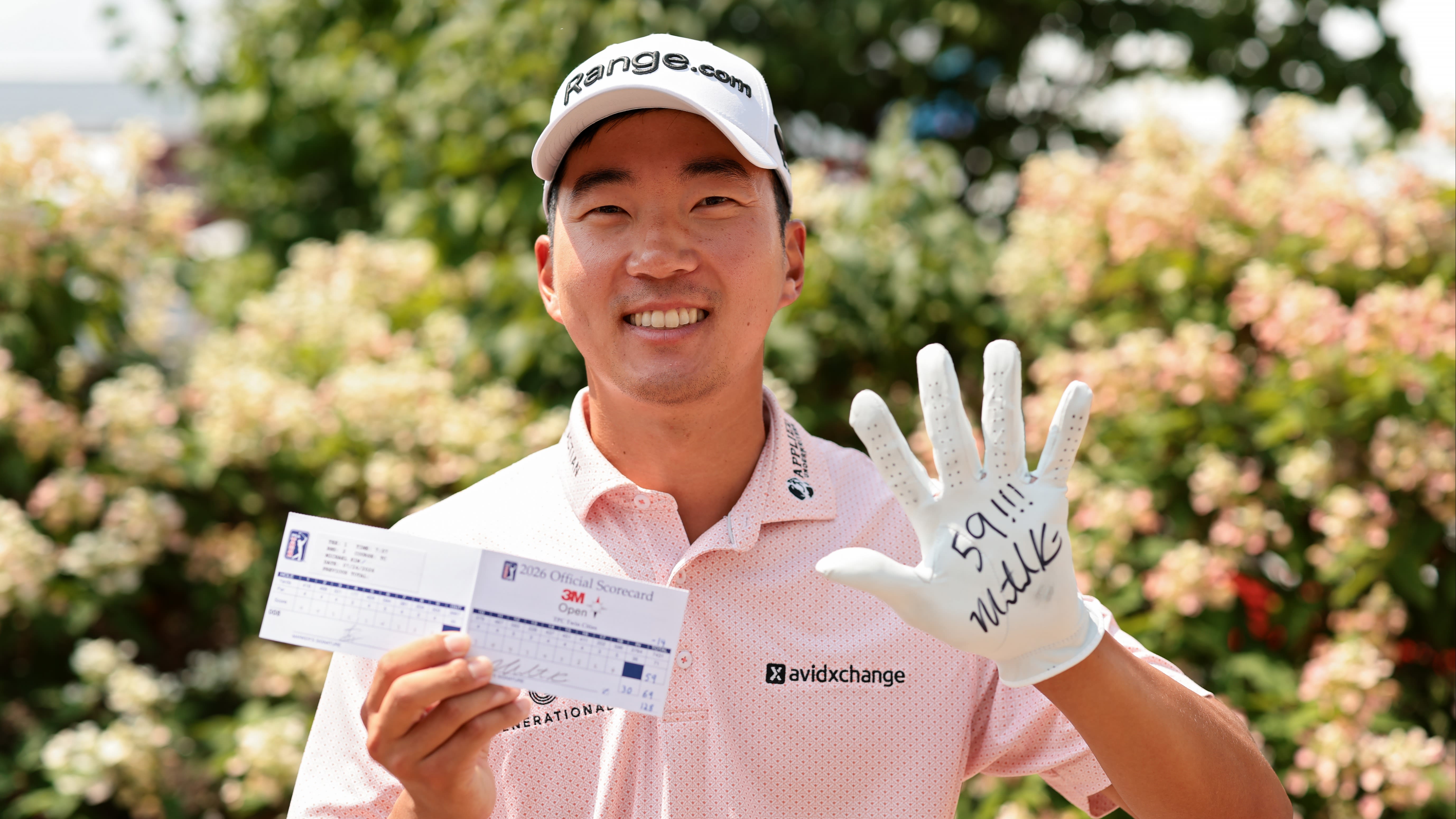
That 24-foot birdie putt on the 18th green is the shot that will live in the highlight packages. It completed Michael Kim’s second-round 59 at the 3M Open, the first sub-60 score of the PGA TOUR season and the 16th round of 59 or lower in tour history.
Watch only the finish, though, and you miss what made the round so useful from a coaching standpoint.
Kim’s first real burst came from Nos. 3 through 7, where he made five consecutive birdies. The longest putt he faced during that stretch was 13 feet because his approach play kept putting the ball in good places. He hit 14 of 18 greens for the day, saved par or better all four times he missed and eventually made 145 feet, 4 inches of putts.
Let's break it all down with 3 lessons you can learn from his 59.
Know Your True Carry Distances
When players start hitting approaches close, they often become more aggressive without becoming more precise. They begin chasing every flag or forcing the shorter club because it once produced the perfect number.
I see that often in lessons. A golfer remembers the one flushed 8-iron and quietly forgets the four that finished short.
A better way to prepare for an in-between yardage is to compare the full pattern. Pick a target on the range that sits between two clubs and create a front-to-back window about 8 to 10 yards deep. Hit five balls with the shorter club using your regular swing. Then hit five with the longer club, gripping down about an inch and shortening the backswing while keeping your normal speed through the ball.
Write down the carry of every shot. The useful answer is not necessarily the club that produced the closest ball. It is the one that put the most shots inside the window and kept the worst miss away from trouble.
Take that same thinking to the course. Know the number the ball must carry, but also know the number it cannot exceed. That gives you a real playing window instead of one perfect yardage that your swing must somehow produce on demand.
Make Your Short Game an Asset
Four missed greens in a 59 does not sound like much. One bogey, however, changes the number on the card to 60.
Kim did not allow any of those misses to cost him a shot. That is where many promising rounds quietly come apart for everyday golfers. They miss a green, decide the recovery has to be exceptional and make the next shot harder than it needs to be.
Start with the lie, not the favorite wedge in your hand.
From a clean fairway or fringe lie, use the lowest-lofted club that safely clears the first obstacle. Play the ball near the middle of a narrow stance, keep the handle fairly neutral and let the chest continue moving through a quiet stroke. The ball should land on the green and begin rolling without much drama.
Deeper rough requires a different answer. Add loft, move the intended landing point closer and give the club enough speed to get through the grass. Trying to manufacture the same low-running shot from both lies usually creates the mistake.
The first bounce is the most useful checkpoint. A ball that lands where planned and leaves an 8-foot putt was better managed than one that misses the spot and happens to stop 3 feet away. Over time, judging the shot by the plan rather than the lucky result improves both technique and club selection.
Mix Up Your Putts When Practicing
Kim’s final push looked nothing like that early five-birdie stretch. He made four birdie putts from outside 10 feet, including a 17-footer on No. 17 and the 24-footer at the last.
Most golfers practice those putts by dropping several balls in one place. The second and third attempts become easier because the read and pace are already familiar. That is not what happens during a round.
When practicing, place one ball at 15 feet, another at 20 and another at 25, each on a different line. Play all three only once, then move them to three new lines and repeat. Go through the entire read each time.
The changing distances are the important part. You are not trying to memorize one stroke length. You are learning to recalibrate without changing the rhythm of the motion.
Kim reached the 17th tee knowing he needed two birdies. On the final hole, he said 60 or 61 did not make much difference, so he accepted the risk that came with chasing 59.
A good round may begin with crisp iron shots, survive because of two ordinary-looking recoveries and finish with a putt you did not need earlier. Kim’s 59 never stopped moving forward. The way he had to do it simply changed.
PGA of America Golf Professional Brendon Elliott is an award-winning coach and golf writer. Read his recent “The Starter” on R.org and his stories on Athlon Sports. To stay updated on his latest work, sign up for his newsletter and visit OneMoreRollGolf.com.