Leaderboards
  Become a Member
  Shop
Shop  Trade In
 Intermediate
Hannah Green’s Winning Mindset: Simple Golf Lessons to Stay Patient, Build Momentum and Close Strong
By Brendon Elliott, PGA
Published on

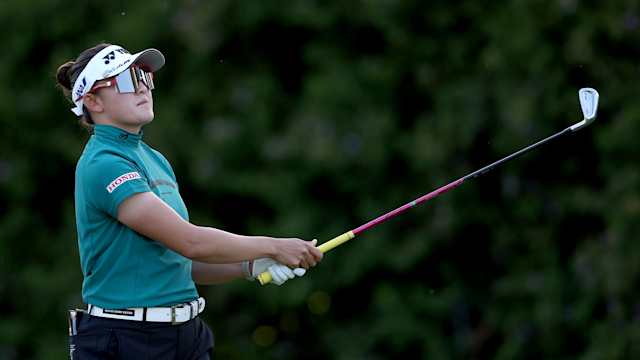
Hannah Green’s victory at the JM Eagle LA Championship was not just about talent. It was about discipline. It was about patience. Most of all, it was about staying present long enough for a round to turn.
That is the part amateur golfers often miss.
Too many players think a round is over after one bad swing, one three-putt or one ugly stretch in the middle of the day. Green’s win in Los Angeles was a reminder that golf does not ask you to be perfect. It asks you to keep showing up to the next shot with belief and a clear plan. Green closed with a 68, erased a sizable back-nine deficit and finished the job in a playoff. For golfers of all abilities, that is not just a tour story. That is a lesson.
Stay In The Fight Longer Than Your Frustration
One of the biggest mistakes I see from everyday golfers is emotional surrender. The score starts drifting the wrong way and, mentally, they are done before the round is.
Green did the opposite.
Even when it looked like the tournament might be slipping away, she kept moving. She did not chase every pin too early. She did not force miracle shots. She stayed in the fight long enough to give momentum a chance to find her.
That is a great lesson for every golfer.
You do not need to “save” the round all at once. You just need to stop the bleeding, steady the pace and give yourself a chance over the next few holes.
Try this:
After any mistake, ask yourself one question: “What does this shot require right now?” Not “How do I get those strokes back?” Not “Why did I do that again?” Just the next task.
For higher-handicap players, that might mean taking more club and aiming for the center of the green.
For better players, it may mean resisting the urge to attack a tucked pin after a bogey.
The goal is simple. Get back in rhythm before you try to get back in the tournament.
Let Momentum Build Instead Of Forcing It
Green’s finish was a perfect example of something coaches talk about all the time. Momentum in golf is real, but it rarely starts with something heroic. More often, it starts with one committed swing, one smart target or one putt that drops at the right time.
Amateurs often try to manufacture momentum with aggression that is not earned. They fire at pins from bad lies. They try to hit a shot they do not own. They turn one mistake into two.
The better approach is to let momentum build naturally.
Here is a simple way to do that on the course:
Pick one hole where you will make your decision-making as simple as possible. Hit the club you trust off the tee. Aim to the fat side of the fairway or green. Commit to a conservative target and make an aggressive swing.
That sounds boring, but boring golf is often winning golf.
Once you execute a couple of solid, connected shots, confidence starts to rise. Then, and only then, does it make sense to press a little when the opportunity is truly there.
For mid-handicap golfers, this can be a game changer. Stop trying to play six perfect holes in a row. Start trying to stack two or three good decisions in a row.
That is how rounds turn.
Trust The Putter To Settle Everything Down
Green’s season-long numbers tell a story. She is first on the LPGA in Strokes Gained: Putting, and that kind of strength has a calming effect on the rest of a player’s game. When you trust the putter, you stop feeling like every approach has to be stiff. When you trust the putter, patience is easier.
This is where golfers of all abilities can improve fast.
You may not hit it like a tour player, but you can absolutely become a better putter by simplifying the skill into two priorities: speed and start line.
On the practice green, spend more time on these two drills:
First, do a ladder drill from 20, 30 and 40 feet. Your only job is to roll each putt past the hole by one to two feet at most. That trains speed control, which is the foundation of good putting.
Second, hit 10 straight putts from four feet with your full routine. Not rapid-fire. Full routine. Read it. Set the face. One look. Stroke it. That builds the kind of trust players need when the round is tight.
For beginners, the win is reducing three-putts.
For better players, the win is converting more putts inside eight feet.
For everybody, the win is making the putter feel like a weapon instead of a liability.
Build A Go-To Closing Routine
What stands out in pressure moments is rarely mechanics alone. It is routine. Players who hold up late almost always look organized. Their breathing slows down. Their pace stays steady. Nothing appears rushed.
That is not accidental.
If you want to finish rounds better, create a closing routine for the final three holes of every round. Keep it simple:
Pick a precise target.
Take one rehearsal swing or stroke with purpose.
Look once.
Commit fully.
That is it.
Do not add thoughts as pressure rises. Subtract them.
One of the smartest things an amateur can do is decide ahead of time how they want to think under pressure. If you wait until the 16th tee to figure that out, it is already too late.
Green’s finish in Los Angeles was a reminder that poise is not passive. It is active. It is trained. It is built shot by shot long before the trophy moment arrives.
The Real Takeaway
Hannah Green’s win should resonate with everyday golfers because it looked like real golf. It had swings in momentum. It had pressure. It had moments where things could have unraveled.
But they did not.
Why?
Because she stayed patient, trusted what she does well and kept giving herself one more chance.
That is a formula every golfer can borrow.
The next time your round feels like it is getting away from you, remember this: you do not need a miracle. You need one clear decision, one committed swing and one made putt to start changing the story.
PGA of America Golf Professional Brendon Elliott is an award-winning coach and golf writer. Read his recent “The Starter” on R.org and his stories on Athlon Sports. To stay updated on his latest work, sign up for his newsletter and visit OneMoreRollGolf.com.