Leaderboards
  Become a Member
  Shop
Shop  Trade In
 Course Spotlight
The King's Kingdom: How Arnold Palmer Transformed Bay Hill Into Golf's Most Welcoming Sanctuary
By Brendon Elliott, PGA
Published on
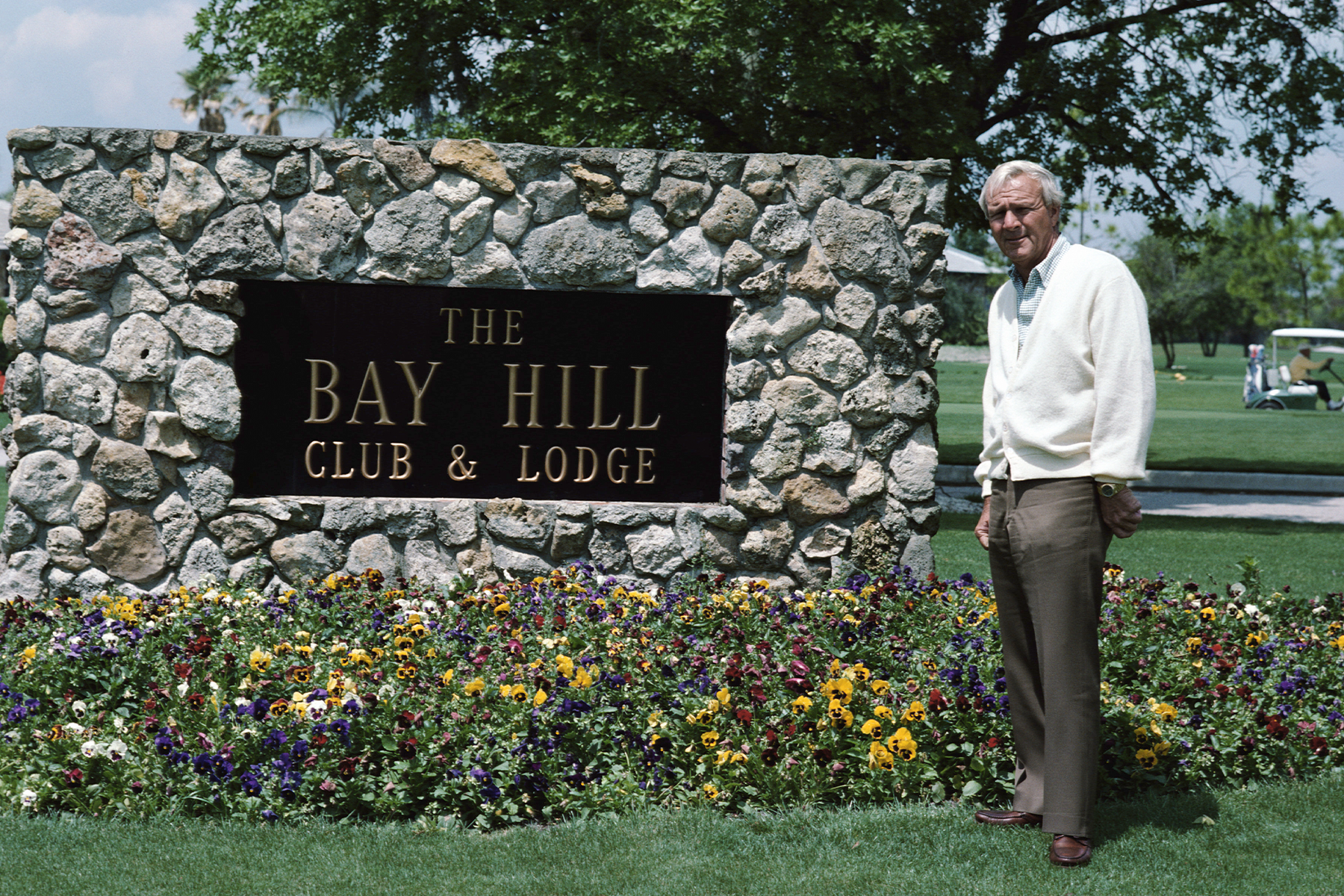
Arnold Palmer didn’t just buy Bay Hill Club & Lodge in 1975. He married it.
This wasn’t a celebrity real estate play or a vanity project. Palmer saw something in this Central Florida property that spoke to him, and over the next four decades, he poured his competitive philosophy into every blade of grass, every bunker edge, every pin placement that would define what Bay Hill means to professional golf.
This week, as the PGA TOUR returns for the 2026 Arnold Palmer Invitational, the world’s best players will face a 7,466-yard, par-72 examination that looks deceptively straightforward on the scorecard but plays like a major championship when conditions tighten. And that’s exactly how Palmer wanted it.
From Wilson’s Vision to Palmer’s Playground
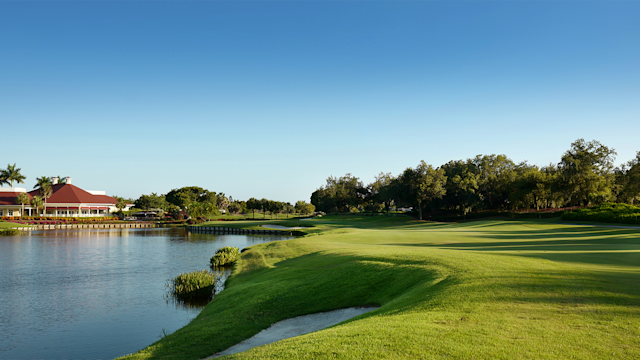
Dick Wilson carved Bay Hill from genuine Florida terrain in 1961, working with elevation changes and natural sinkholes that gave the property something rare for the state: actual topography. Wilson’s routing took advantage of rolling land that most Florida courses can only dream about, creating a canvas that would later become Palmer’s masterpiece.
When Palmer first played Bay Hill during a 1965 exhibition match, he shot 66, demolished the course record, beat Jack Nicklaus by seven strokes, and immediately called his wife Winnie with a declaration: “Babe, I’ve just played the best golf course in Florida, and I want to own it.”
That purchase in 1975 set everything in motion. Palmer didn’t just acquire a golf course. He acquired a platform for his vision of what championship golf should look and feel like. By 1979, he’d convinced the PGA TOUR to move what was then the Florida Citrus Open Invitational from Rio Pinar Country Club to Bay Hill, beginning the modern era that still defines the tournament today.
Palmer himself had won that Florida Citrus Open back in 1971 at Rio Pinar, so when the event arrived at his home course eight years later, it wasn’t just a host welcoming guests. It was a champion creating the next chapter of a tournament he’d once conquered.
The Bermuda Challenge
Bay Hill’s greens tell you everything about Palmer’s competitive standards. They’re TifEagle bermudagrass kept at .110 inches, what director of grounds Chris Flynn calls “the flattest greens on the PGA Tour.”
Don’t let that fool you. At Bay Hill, “flat” is a trap.
These greens run 7,500 square feet, the largest on the early 2026 TOUR schedule. They pitch back-to-front and can hit 14 to 14.5 on the Stimpmeter. The real test isn’t wild slopes, it’s firmness and grain. Miss your landing spot by five feet and a perfect approach shot ends up somewhere you didn’t plan.
That’s the Bay Hill paradox: huge greens that somehow shrink under pressure. When the surfaces get firm and the wind picks up, there’s nowhere to hide. PGA TOUR agronomist Bland Cooper put it simply: “As big as they are, they’re hard to hold.”
Flynn has pushed speeds as high as 15 on the Stimpmeter, though TOUR officials occasionally ask him to dial it back when wind threatens to move balls at address. This week’s forecast, breezy with afternoon showers, means the greens will shift personality throughout the day: softer early, potentially glassier late if sun and wind take over.
The Holes That Define Champions
Bay Hill’s closing stretch, 16 through 18, produces more drama than almost any three-hole finish on TOUR.
The par-5 16th is where Russell Henley chipped in for eagle last year en route to his fifth TOUR victory. Water guards the left. The green rejects even good shots.
The par-3 17th lost its famous “Beach Bunker” ahead of 2025 and now features a grass bank. It still plays over water to a green that shrinks when the pin tucks tight.
Then comes 18. The hole that separates contenders from champions. Water wraps the right side. The back-right pin at Bay Hill’s calling card turns even conservative misses into nerve-wracking up-and-downs. Chris Gotterup, making his debut this week, already knows: “They always tuck it in the back right and you have to hit a good shot in there.”
That’s where Tiger Woods built his record eight victories at Bay Hill. No player has won more times at a single PGA TOUR venue. That standard hangs over every champion who follows.
The 2026 Tweaks
For 2026, several course modifications will honor Mr. Palmer’s course design philosophies while adapting to modern tournament golf.
They adjusted the front two bunkers on the par-4 10th for better playability. They removed a front-right bunker on 11 and created a fairway spine that produces interesting strategic decisions. On 14, they combined bunkers on the left into one larger hazard with palm trees integrated into the design, a nod to Bay Hill’s natural Florida character.
The most significant change is around the greens. Bay Hill brought back the short game runoff areas that had been lost in recent years. These hand-mowed surrounds create tighter lies and more variety in chipping options, replacing the rough collars that had simplified recovery shots.
Players have responded positively, which matters at a place where championship standards demand every detail reflects the host’s legacy.
Why Bay Hill Still Feels Different
I’ve played Bay Hill about 15 times. Stayed at the Lodge. Brought my former Little Linksters Junior Golf Tour there. Brought PGA Junior League teams. Attended more meetings in those rooms than I can count. Had my PGA of America National Youth Player Development Award video made there in 2017.
But what I remember most are three private conversations I had with Mr. Palmer himself while there.
That’s Bay Hill. It’s not just another tournament stop with a big purse and a strong field. It feels like it matters more because Palmer didn’t just lend his name to it. He shaped it. Hosted it. Greeted players personally. Turned the week into a tradition instead of a transaction.
Palmer’s father, PGA Member Deacon Palmer, and younger brother, Jerry, were both superintendents at Latrobe Country Club for a time. He grew up around the people who maintained championship conditions. That respect shows in how Bay Hill operates today, a place that hosts one of golf’s premier events while remaining a members’ club the other 51 weeks of the year.
It’s a balance that requires constant attention and a philosophy that mirrors Palmer’s own approach: make it excellent, make it fair, make it memorable.
When players arrive this week for the eighth event of the 2026 PGA TOUR season and the third of eight Signature Events, they’re chasing a $4 million winner’s check and 700 FedExCup points. But they’re also stepping into a week defined by the standard of the greatest, playing a course that reflects Palmer’s belief that the best players should be tested, not entertained.
That’s why Bay Hill endures. It’s grown with the TOUR without losing what makes it special: the feeling that you’re watching golf inside a story that still matters.
PGA of America Golf Professional Brendon Elliott is an award-winning coach and golf writer. Read his recent “The Starter” on R.org and his stories on Athlon Sports. To stay updated on his latest work, sign up for his newsletter and visit OneMoreRollGolf.com.