Golf Travel
  Leaderboards
  Become a Member
  Shop
Shop  Trade In
 Course Spotlight
Shinnecock Hills U.S. Open Preview: History, Wind And One Of Golf’s Great Tests
By Brendon Elliott, PGA
Published on
There are U.S. Open venues with history.
Then there is Shinnecock Hills.
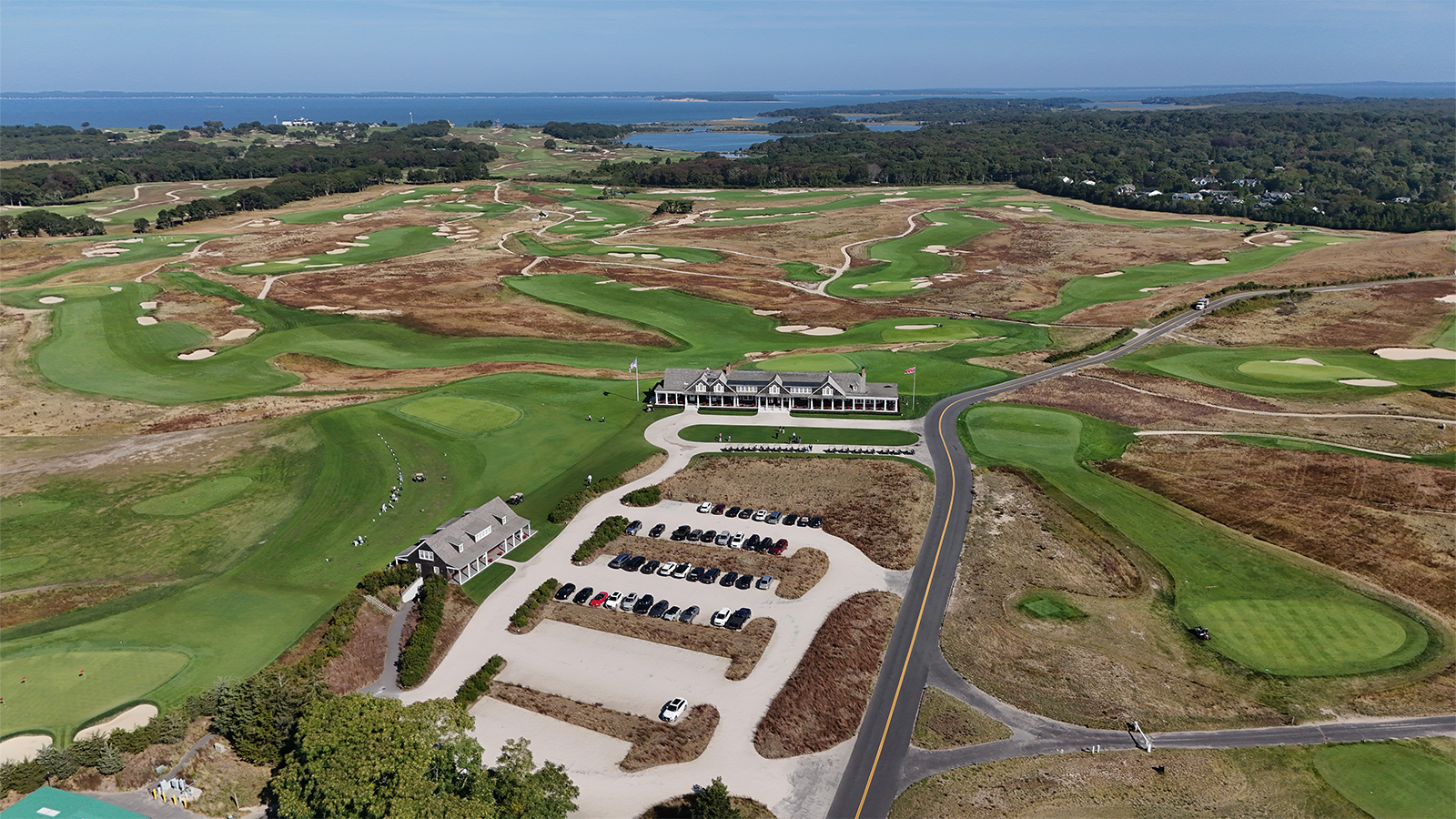
The 2026 U.S. Open returns to Southampton, N.Y., and one of the most important golf courses in American golf. Shinnecock Hills is one of the five founding clubs of the USGA, the oldest incorporated country club in the United States and the site of the second U.S. Open in 1896.
This week, it hosts the national championship for the sixth time.
Shinnecock will be set up at 7,440 yards and play to a par of 70, but its challenge is not built only on length. It is built on wind, angles, firm turf, uneven lies, demanding greens and the ability to keep thinking clearly when the course starts asking uncomfortable questions.
That is what makes this place special.
It does not test one part of the game. It tests all of it.
Why Shinnecock Fits The U.S. Open
Shinnecock Hills has hosted the U.S. Open in 1896, 1986, 1995, 2004 and 2018. Past champions there include James Foulis, Raymond Floyd, Corey Pavin, Retief Goosen and Brooks Koepka.
That list tells you something about the course.
There is no single prototype for winning at Shinnecock. Power helps. Precision helps. Patience is required. But the champion must be willing to play smart golf for four days and accept that par is often a very good score.
The present layout was designed by William Flynn in 1931. Flynn was known for routing golf courses around natural landforms and prevailing wind, and Shinnecock reflects that perfectly. The course moves in different directions, exposes players to changing conditions and forces them to handle a variety of shot shapes and wind angles.
It is not a course players simply overpower.
It is a course they have to solve.
The Course
Shinnecock’s outward nine measures 3,819 yards and plays to par 35. The inward nine measures 3,621 yards and also plays to par 35.
The numbers matter, but they do not tell the whole story.
The fairways may look generous in places, yet the best angles are extremely important. Missing on the wrong side can leave a player with no realistic way to attack a hole location. Around the greens, closely mown runoffs will force players to choose between putting, bumping, pitching or trying to use a slope.
That variety is what separates Shinnecock from a simple narrow-fairway, thick-rough test.
It is a thinking player’s U.S. Open.
Key Holes To Watch
The second hole is a 252-yard par 3 and the longest par 3 on the course. Depending on tee and hole location, it can play anywhere from a long iron to a fairway wood. The opening at the front of the green allows players to use the ground, but a miss in the wrong place can turn into an early bogey.
The seventh is Shinnecock’s famous Redan-style par 3. It will measure 187 yards for the championship and asks players to understand the shape of the green, the wind and the proper landing area. It is not just a target shot. It is a shot that has to use the architecture.
The 10th is a 415-yard par 4 that begins the inward nine with decision-making. It is not long by modern standards, but it asks for a clear tee shot, a proper angle and excellent distance control into the green.
The 13th is a 371-yard par 4 and one of the most interesting strategy holes on the course. It can be a scoring chance, but only if players place the ball correctly. Aggression without precision can create a difficult recovery.
The 16th is the lone par 5 on the inward nine and stretches to 614 yards. It could become one of the week’s true swing holes. Some players may have a chance to reach in two under the right conditions, while others will need to position the ball carefully and lean on wedge play.
The 17th is a 176-yard par 3 that can become much more difficult when the wind is up. Club selection, trajectory and patience will matter there, especially late on Sunday.
Then comes the 18th, a 490-yard par 4 with one of the great finishing backdrops in American golf. A strong tee shot is required, but the approach is just as demanding. If the championship is close, the final hole can easily decide it.
Who To Watch
Scottie Scheffler will be at the center of the conversation because he arrives with a chance to complete the career Grand Slam. His ball control, patience and ability to avoid emotional mistakes fit the U.S. Open formula.
Rory McIlroy will draw attention as well. His power gives him options, but Shinnecock will ask for more than speed. His wedge play, putting pace and ability to stay patient through difficult stretches could matter just as much as his driving.
Aaron Rai is another name worth watching after winning the PGA Championship in May. His precision-first style could translate well to a course where angles, fairway position and smart misses are so important.
Bryson DeChambeau is always interesting in a U.S. Open because his strength can change how a course plays. At Shinnecock, the question will be whether that power can be paired with enough control around firm greens.
Jon Rahm belongs in the conversation because difficult golf tends to reward complete players. His ball-striking, competitiveness and ability to flight shots should travel well if he is sharp.
J.J. Spaun arrives as the defending U.S. Open champion after winning at Oakmont last year. Defending a national championship is never easy, but his Oakmont victory proved he can handle difficult scoring conditions and major-championship pressure.
Brooks Koepka would be a natural name to watch because he won the 2018 U.S. Open at Shinnecock. His status is less certain, though, after withdrawing from the RBC Canadian Open with a hand injury. If he is healthy enough to compete, he knows exactly what this place demands.
What Will Win
This U.S. Open should reward the player who controls trajectory, chooses smart targets and keeps the ball in the correct places around the greens.
Distance will help. It always does.
But Shinnecock asks for more.
The champion will need to accept conservative lines, take advantage of the few real scoring chances and avoid turning small mistakes into big numbers. He will need to putt beautifully from long range, handle uneven lies and play recovery shots with imagination.
Most of all, he will need patience.
That is the beauty of Shinnecock Hills. It does not ask players to be perfect. It asks them to be complete.
That is exactly what a U.S. Open should do.
PGA of America Golf Professional Brendon Elliott is an award-winning coach and golf writer. Read his recent “The Starter” on R.org and his stories on Athlon Sports. To stay updated on his latest work, sign up for his newsletter and visit OneMoreRollGolf.com.