 Leaderboards
  Become a Member
  Shop
Shop  Trade In
 quick coaching
Pressure Golf Secrets: Coaching Tips to Stay Calm and Score Low Like Hyo Joo Kim & Nelly Korda
By Brendon Elliott, PGA
Published on
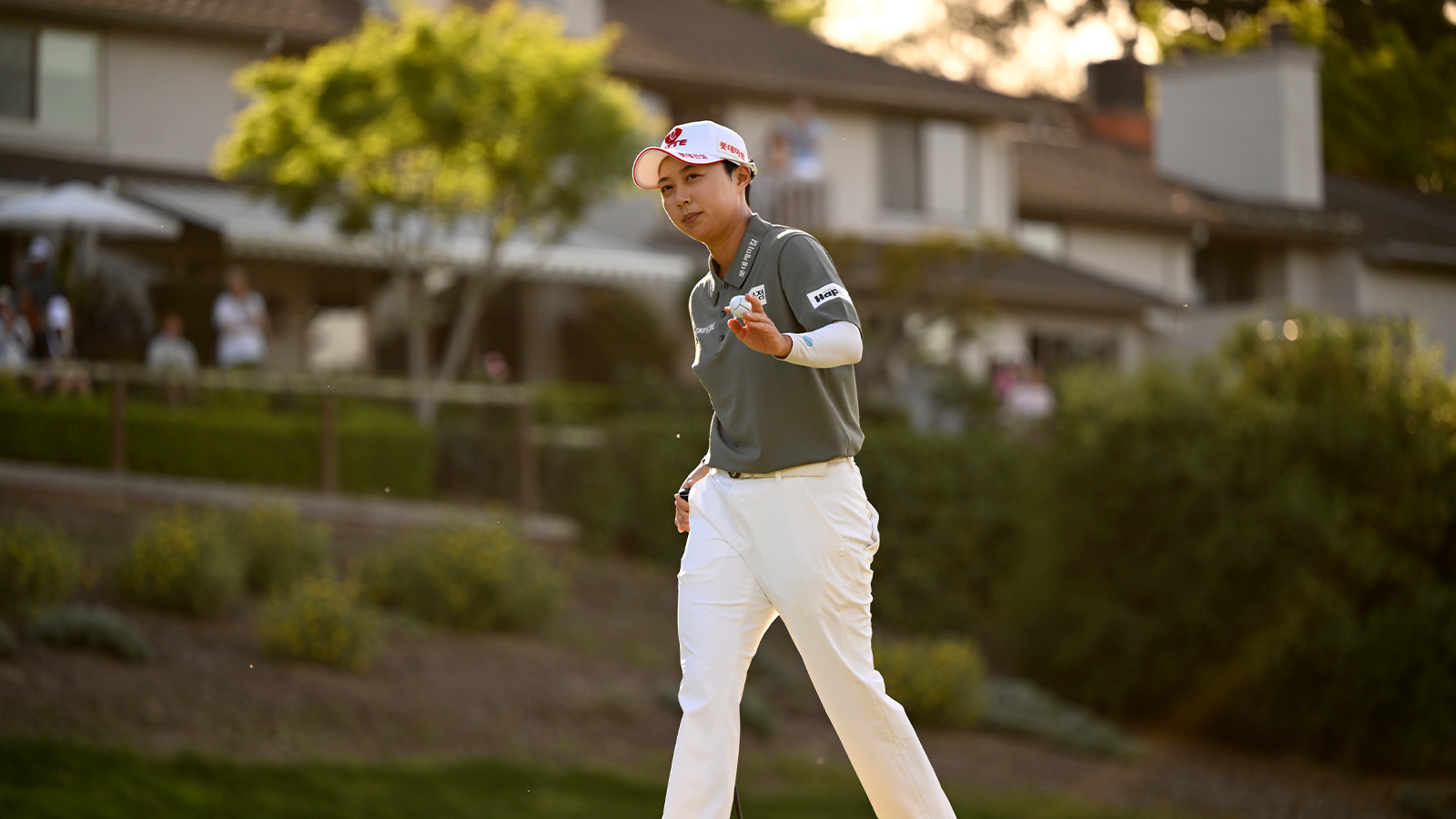
Sunday at the Fortinet Founders Cup gave us the kind of final-round duel golfers love because it felt honest. Hyo Joo Kim did not coast to the finish. She had to hold on. Nelly Korda did not make it easy. She came charging. In the end, Kim survived by a shot, and that one-shot margin told the real story.
This wasn't just a battle between two elite players. It served as a lesson in how good golf gets done when the pressure is real. Kim showed what it looks like to win without having your cleanest stuff. Korda showed how dangerous a player can be when rhythm, confidence and ball-striking come together.
That is why this final round is important for everyday golfers. You do not need to swing like Kim or Korda to learn from them. Just notice what worked for them when the pressure was on.
Tip 1: Build a short game that can save the round like Hyo Joo Kim
Kim’s win reminds us that golf is not always about your best swing. Sometimes, it is about making the shots that keep a tough round under control.
That matters for all of us.
Many golfers focus too much on perfecting their full swing and not enough on building a strong short game. Kim’s play on Sunday showed why the short game matters. Even when things are not going smoothly, a reliable short game helps you stay in the round.
Here is a simple practice plan to help:
Set up 10 balls around the green from five different lies. Use two balls each from fairway cut, rough, a tight lie, a slight downhill chip and a basic bunker-edge pitch. Play each one all the way out. Keep score. Your goal is six up-and-downs out of 10.
Then write down your misses. Did you leave them short? Hit them too far? Miss them left or right? Most golfers are not bad at chipping in general. They just have one miss pattern that they never study.
If you want to lower scores, stop treating your short game like a warm-up. Make it part of your identity as a golfer.
Tip 2: After a mistake, make the next shot smaller to help reset
What stood out most about Kim was not perfection. It was composure. She had setbacks, but she did not let one mistake turn into three. That is one of the most important skills in golf, and one that amateurs often overlook.
Too often, players try to fix everything after a bogey with one big swing. They rush, get emotional, and try to force a good result. That is how one bad hole can turn into a disaster.
Try this three-step reset after any mistake:
First, take one slow breath before the next shot.
Second, pick the smallest possible target. Not just the fairway. Pick a specific patch of fairway, tree line, or edge of a bunker.
Third, make your only goal solid contact. Not birdie. Not getting the shot back. Just one committed swing.
You can also split the round into three-hole mini matches. If you have a bad hole, do not try to fix the whole round at once. Focus on playing the next three holes at even par or better. This helps you stay present and keeps your emotions in check.
Tip 3: Use the early holes to find rhythm like Nelly Korda
Korda’s charge did not come from forcing the action. It came from getting into rhythm quickly and trusting it. That is such an important lesson for regular golfers, because the first few holes often set the tone for the day.
A lot of amateurs waste the opening stretch by playing tense golf. They steer it. They swing too hard.
They worry about score before they have found a feel for the round.
Do this instead:
On the range before you play, hit a few wedges, a few mid-irons and a few tee balls. Then finish with the club you are most likely to use on your first approach shot. That helps connect practice to the course.
For the first three holes, commit to just one swing thought. Maybe it is tempo. Maybe it is balance. Maybe it is finishing the swing. Keep it simple.
And early in the round, aim away from big trouble. Smart targets let you make confident swings. That is how rhythm starts. Rhythm is not passive. It is controlled freedom.
Tip 4: Let ball-striking be your safety net
Even though Nelly Korda came up short, she showed once again how powerful steady ball-striking can be. When you are driving it in play and hitting greens, you keep pressure on the course and give yourself a chance to make birdies without needing miracles.
That is the kind of golf most players should want to build.
Try this range drill:
With the driver, hit 10 balls to a defined fairway target and count how many would have stayed in play. Then hit 10 mid-irons to a green-sized target and count how many would have finished inside that window.
Now take that same mindset to the course. After the round, track three things: fairways hit, greens hit and penalty shots. Those numbers will tell you far more about your game than a random birdie or frustrating three-putt.
Final Thoughts
What made Sunday so compelling was that Kim and Korda showed two different ways to compete under pressure. Kim showed grit, patience and recovery. Korda showed tempo, trust and control.
That is a strong blueprint for any golfer.
When your game feels shaky, lean on your short game and your routine. When your swing feels good, trust it and keep giving yourself chances. And when the moment starts to feel too big, shrink it back down to the shot in front of you.
That is how rounds are saved. That is how scorecards stay together. And sometimes, that is how tournaments are won.
PGA of America Golf Professional Brendon Elliott is an award-winning coach and golf writer. Read his recent “The Starter” on R.org and his stories on Athlon Sports. To stay updated on his latest work, sign up for his newsletter and visit OneMoreRollGolf.com.


