Leaderboards
  Become a Member
  Shop
Shop  Trade In
 Intermediate
Nelly Korda’s Winning Mindset: How to Protect a Great Golf Round Under Pressure
By Brendon Elliott, PGA
Published on
Every golfer knows the feeling.
You are playing well. Maybe really well. The swing feels organized, the scorecard looks better than usual and suddenly the round starts to feel different. What felt free on the fourth hole feels a little tighter on the 14th. You stop thinking about the shot in front of you and start thinking about the number you could shoot.
That is where good rounds often get away.
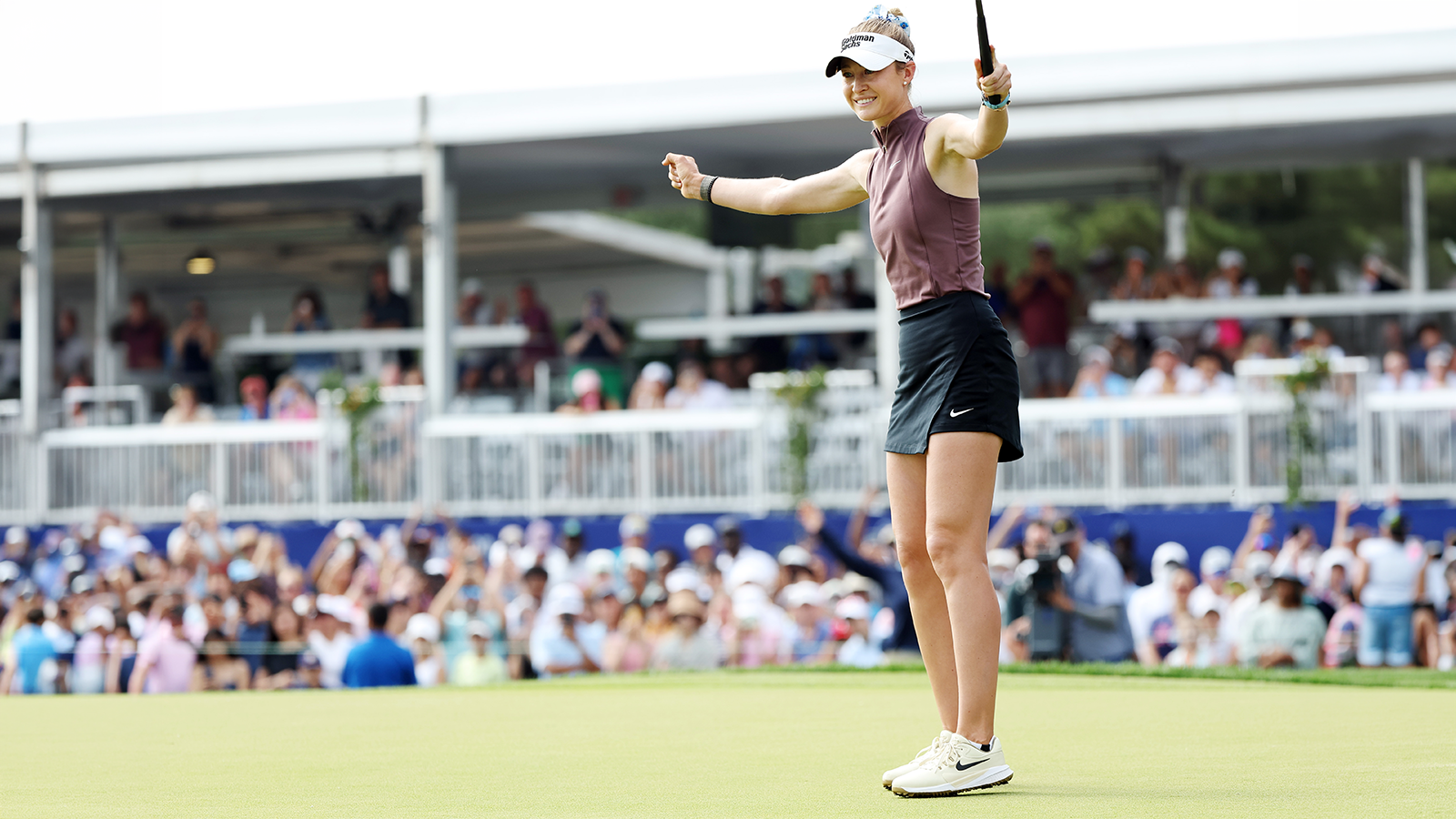
Nelly Korda’s win at The Chevron Championship offered a great reminder that protecting a great round is a skill. Korda went wire to wire at Memorial Park, finished at 18-under, won by five shots and claimed her third major championship. She also returned to No. 1 in the world. Her performance included 23 birdies and 59 greens in regulation for the week, a strong sign of just how much control she had over the tournament.
The final result looked dominant, but that does not mean it was simple. Protecting a lead, especially in a major championship, is its own challenge. For everyday golfers, the lesson is not to copy Korda’s swing or expect to hit tour-level shots. The lesson is learning how to manage yourself when the round starts to matter.
As a PGA Coach, I see this all the time. Many golfers do not lose good rounds because their swing suddenly disappears. They lose them because their thinking changes. They start steering, protecting, rushing or trying not to make mistakes.
The better goal is simple: keep making committed swings to smarter targets.
Do Not Start Protecting Too Early
One of the biggest mistakes golfers make during a good round is changing personalities too soon.
They hit driver confidently for 12 holes, then suddenly guide one into trouble. They aim at smart targets all day, then start playing away from every hazard. They roll putts with good pace, then leave everything short because they are afraid of the comeback putt.
Protecting a score does not mean playing scared. It means choosing the right target and still making a full, athletic, committed swing.
Korda’s final round showed that well. She closed with a 2-under 70 and no one got closer than four shots all afternoon. That is not just physical control. That is emotional and strategic control.
For amateur golfers, the model is not “play like Nelly.” It is “stay like yourself.” Keep the routine, rhythm and decision-making that helped you play well in the first place.
Aim at the Big Part of the Green
When a good round starts to feel important, your targets should usually get smarter, not smaller.
That means aiming at the larger section of the green more often. It means respecting short-sided misses. It means knowing when the flag is not worth chasing.
This is one of the most reliable pieces of coaching advice for golfers at almost every level. Middle-of-the-green golf may not sound exciting, but it keeps big numbers away. It also gives you more putts for birdie and far fewer stressful recovery shots.
Here is a simple rule:
If a miss would create a hard up-and-down, choose a safer target.
That does not mean you are being passive. It means you are giving yourself room to be human. Even very good players miss shots. The difference is that smart players miss to places where the next shot is still manageable.
Use a Three-Question Pre-Shot Check
When nerves show up, your routine has to become simpler, not more complicated.
Before each full shot, ask yourself three questions:
- Where is the safest good target?
- Where is my best miss?
- What swing can I fully commit to?
The third question matters most. A conservative target with a committed swing is strong golf. A conservative target with a fearful swing is usually trouble.
This works because it gives your mind a job. Instead of thinking, “Don’t blow this round,” you are thinking about the target, the miss and the motion. Those are things you can control.
I have used versions of this with juniors, competitive players and adult golfers trying to break scoring barriers. The details change by skill level, but the principle does not. The clearer the job, the better chance the body has to respond.
Practice the Finish, Not Just the Start
Most golfers practice like the first six holes are the problem.
They hit balls until the swing feels good, roll a few putts and head to the course. But scoring barriers usually show up late, when the player becomes aware of the number.
So practice that moment.
The Finish Strong Drill
Pick three targets on the range: one wide, one medium and one narrow. Hit nine balls total, pretending you are playing the final three holes of your best round.
For each “hole,” hit:
- One tee shot
- One approach shot
- One recovery shot or wedge shot
Before every ball, go through your full routine and say the situation out loud: “I need three pars to break 80,” or “I am one over with three to play.”
The point is not to create perfect pressure. The point is to train your brain to stay organized when the shot feels like it counts.
You can also do this on the putting green. Set up five putts from three to six feet. Tell yourself you need four out of five to finish your best round. Go through your full routine. Keep score. Repeat.
Pressure feels less foreign when you have rehearsed it.
Use Par as a Weapon
One reason Korda’s Chevron win was so impressive is that she did not need to force the issue once she had control. She played efficient golf, kept the field at a distance and closed with a five-shot victory.
That is a huge lesson for recreational golfers.
When you have a good round going, par is not boring. Par is powerful.
Aiming at the middle of the green, two-putting and walking to the next tee can feel too simple when you are excited. But that is often exactly what the round needs. Most personal-best rounds are protected by avoiding doubles, not by chasing one more perfect birdie.
Use par as a weapon by doing three things:
Play away from penalty areas.
A bogey is recoverable. A penalty ball often changes the round.
Take enough club.
Many amateurs under-club when nervous because they make shorter, tighter swings.
Accept the smart miss.
If the safe side gives you a chip and putt, take it. The short-sided miss is where good rounds often go to die.
Your Action Items
The next time you have a good round going, use these three rules:
Stay the same speed.
Do not rush because you are excited or slow down because you are nervous. Keep your walking pace, routine and breathing consistent.
Aim more intelligently, not more fearfully.
Choose targets that protect your score, but make full swings to them.
Think in one-shot jobs.
Your job is not to “break 80” while standing on the 16th tee. Your job is to hit the next fairway, the next safe part of the green or the next putt with good speed.
That is what great players do so well. They do not pretend pressure is absent. They simply give themselves a job small enough to handle.
Korda’s Chevron win will be remembered as another major championship moment in an already remarkable career. For everyday golfers, it can also be remembered as something more useful: a lesson in how to keep a great round from becoming too big to finish.
PGA of America Golf Professional Brendon Elliott is an award-winning coach and golf writer. Read his recent “The Starter” on R.org and his stories on Athlon Sports. To stay updated on his latest work, sign up for his newsletter and visit OneMoreRollGolf.com.