Leaderboards
  Become a Member
  Shop
Shop  Trade In
 quick coaching
How to Hit the Bump and Run: 5 Keys for Success
By Brendon Elliott, PGA
Published on
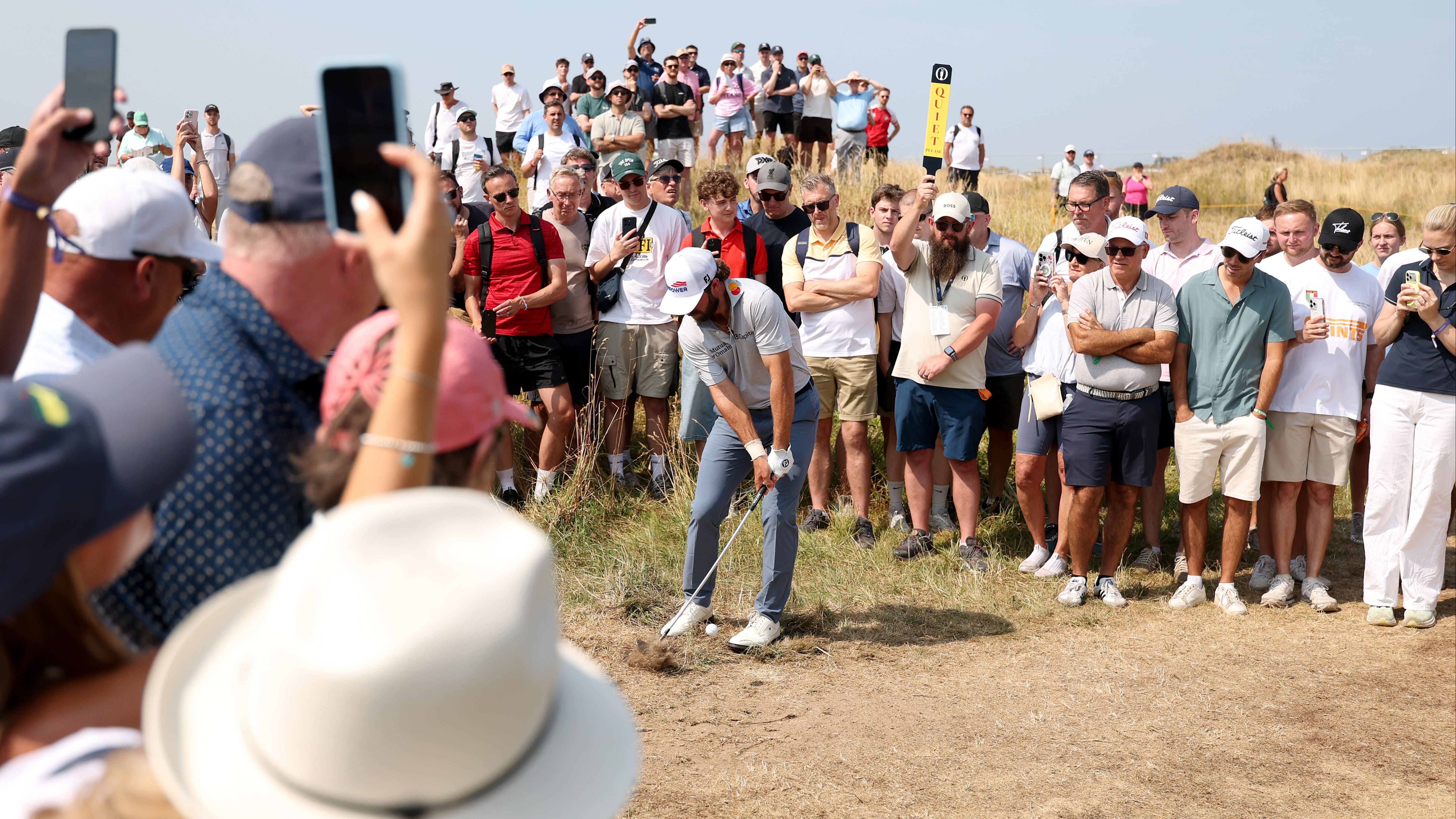
At The Open Championship so far, Royal Birkdale has played firm and fast as predicted, and its steep, expansive run-off areas around several greens have provided a true links golf test for players.
Those baked out, closely mown slopes have forced the world's best to answer a question: Should I putt it, pitch it or use the ground?
For everyday golfers, that question offers a timely lesson in the bump-and-run.
Think Like Seve: See the Ground as a Route
One of Royal Birkdale’s most memorable examples of links imagination came in 1976. On the 18th hole, 19-year-old Seve Ballesteros faced two bunkers between his ball and the green. Instead of flying the shot over them, he ran it between the hazards and onto the putting surface, setting up a birdie.
It was not a conventional greenside bump-and-run, but it captured the idea behind one. Ballesteros saw the ground as a possible route, not something that automatically had to be carried.
That is the mindset I want golfers to develop around firm greens.
Read the Route Backward
Most golfers begin with the lie and immediately choose a club. I would reverse that process.
Start at the hole and trace the ball’s likely path backward to its starting point. Read the putting surface as you would a putt, then continue beyond the green.
Study the following on your shot:
- Changes in grass height
- Slopes and depressions in the apron
- The seam where fringe meets green
- Firm or soft patches
- Sprinkler heads, pitch marks or uneven turf
During The Open, watch players and caddies inspect these recovery routes. Their attention will not stop at the edge of the green because the first bounce may occur several yards before it.
In lessons, I often see a player choose what appears to be a perfect landing spot without considering what happens immediately afterward. The ball lands there, catches an uneven seam and loses most of its speed. The stroke may have been fine. The route was not.
Decide Whether to Carry the Transition
The boundary between fringe and putting surface deserves special attention. It can slow the ball, redirect it or create an unpredictable bounce.
Whenever possible, avoid making the first bounce directly on that seam.
You generally have two choices:
Carry the transition. Land the ball on the green when the fringe is thick, uneven, soft or growing against the shot.
Use the apron. Land short and let the ball roll through when the turf is tight, smooth and moving in the same direction as the shot.
Royal Birkdale will present both options. Some run-offs will invite the ball to feed along the ground. Others will require enough carry to bypass an unreliable section.
Good links golf is not about playing every shot low. It is about recognizing when the ground provides the safest route.
Build Contact for Firm Turf
Closely mown lies make many golfers anxious. They see little grass beneath the ball and try to help it into the air, adding hand action and making clean contact harder.
For a basic bump-and-run, begin with an 8-iron, 9-iron or pitching wedge. Grip down slightly and stand a little closer than you would for a standard chip. Let the shaft sit more upright, which may raise the heel slightly off the turf.
Then:
- Position the ball near the middle of your stance.
- Use light grip pressure.
- Move your chest, arms and club together.
- Brush the grass instead of driving the leading edge downward.
- Keep the club moving through impact.
I would not force the hands dramatically forward from a tight lie. Too much shaft lean removes loft and exposes the leading edge.
The goal is not the lowest possible shot. It is predictable contact and a manageable first bounce.
Choose the Club for the Crossing Distance
Golfers often select a bump-and-run club according to the total distance to the hole. A better question is: How far must the ball travel in the air before it reaches dependable turf?
That is the shot’s crossing distance.
A longer crossing distance may require more loft to clear rough, a collar or the bottom of a run-off. A shorter crossing distance followed by plenty of green may allow an 8-iron or 9-iron to do most of the work.
During The Open, players may use different clubs from similar distances because the routes are different. The club should fit the ground, not force the golfer to manipulate the stroke.
PGA of America Golf Professional Brendon Elliott is an award-winning coach and golf writer. Read his recent “The Starter” on R.org and his stories on Athlon Sports. To stay updated on his latest work, sign up for his newsletter and visit OneMoreRollGolf.com.