Leaderboards
  Become a Member
  Shop
Shop  Trade In
 Intermediate
How to Handle Pressure in Golf: Lessons from Nelly Korda at Mayakoba
By Brendon Elliott, PGA
Published on
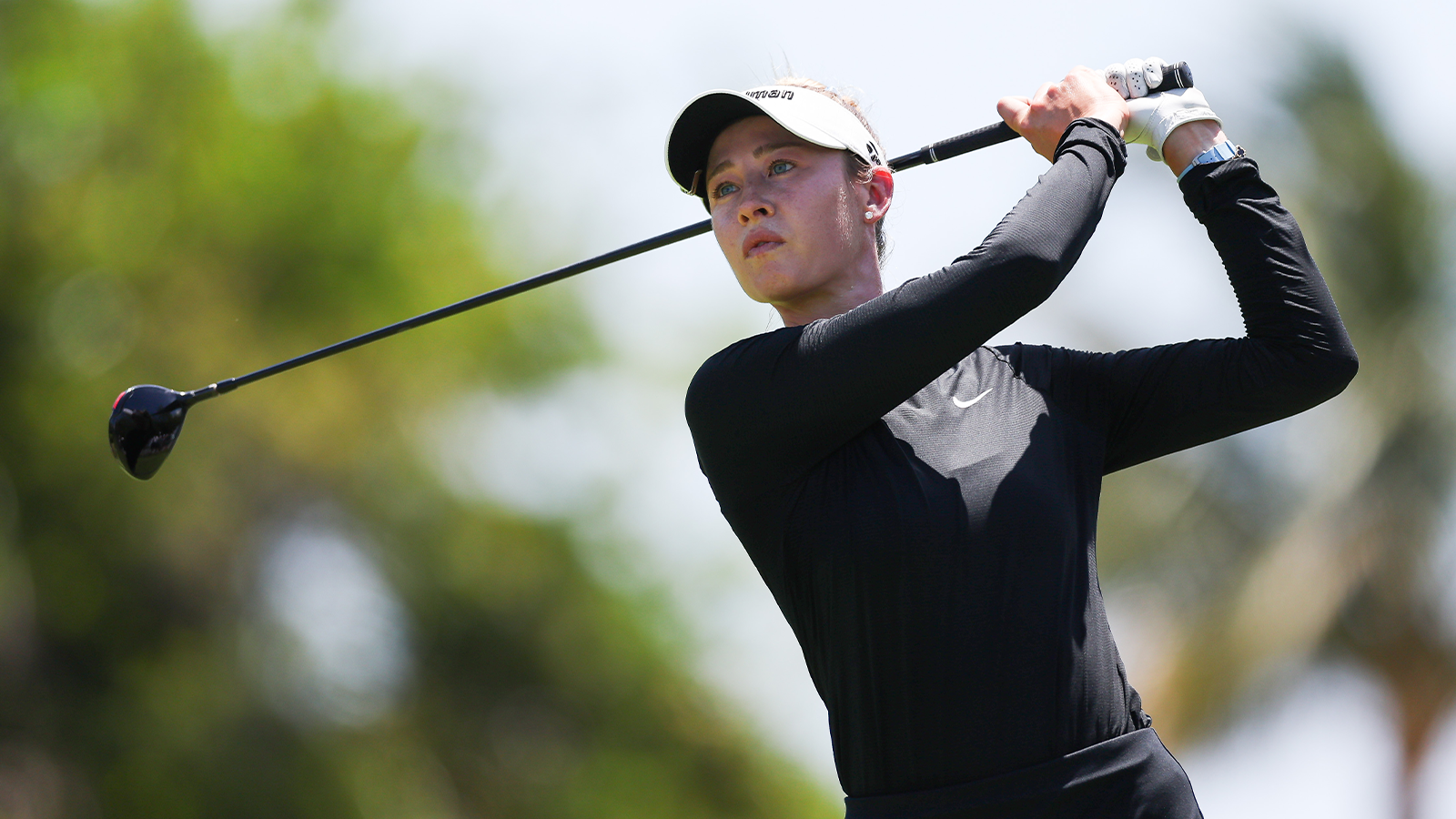
At the halfway point of the Riviera Maya Open at Mayakoba, Brianna Do and Nelly Korda were tied for the lead at 9-under. That alone makes it compelling. The deeper lesson is even better. Korda is the current World No. 1. Do is a 36-year-old veteran who first joined the LPGA Tour in 2013, is still chasing her first LPGA win. After 54 holes, Nelly was still in the lead while Brianna played a solid, even-par round and was in 4th.
That is a coaching article waiting to happen.
Because every golfer, at some level, eventually faces a version of this moment. Maybe you are leading your club championship. Maybe you are in the final group of a junior event. Maybe you are having the round of your life and suddenly realize one of the best players in the field is right there beside you.
So how do you handle it?
You do not prepare by trying to become the other player. You prepare by becoming even more committed to your own game.
In this case, the stats tell part of the story. Korda has been a little longer through 36 holes. Do has been slightly more accurate. Both have hit plenty of greens. Both have kept enough momentum going to get themselves into the same spot, even if the path looked a bit different. That is exactly what average golfers need to understand. Pressure does not require perfect golf. It requires clear-minded golf.
Do Not Play the Player
This is the first rule when you are paired with someone bigger, better-known or more decorated.
Do not play their résumé.
Too many golfers change strategy the second they feel intimidated. They swing harder, fire at flags they normally would not touch or try to answer every good shot with a heroic one of their own. That almost always ends badly.
If you are Brianna Do in this situation, the job is not to out-Nelly Nelly. The job is to keep playing the golf that got you there.
That is the same for the 18-handicap leading the member-guest. If your normal game is fairways, middle of the green and steady two-putts, do not abandon that because the scratch player in your group just made birdie.
Action item: Before the round, write down three things that got you into contention.
- One tee-shot thought
- One approach-shot priority
- One putting cue
When pressure rises, go back to those three things only.
Shrink the Moment
Pressure feels the biggest when you think about the whole situation.
Leaderboards do that. Reputations do that. Names do that.
The best way to deal with pressure is to make the moment smaller.
Not the tournament. Not the person next to you. Just this shot.
That means picking a target, choosing a club, making one committed swing and then moving on. The players who survive pressure best are usually the ones who simplify fastest.
For better golfers, that might mean narrowing the target and controlling adrenaline. For mid- and high-handicappers, it may be even simpler. Get the ball in play. Aim for the fat part of the green. Take your medicine when you need to.
Try this between shots:
- Take one deep breath in through your nose
- Exhale slowly
- Say one simple phrase to yourself: “This shot only”
That is not fluff. It is a reset button.
Stay Aggressive in the Right Places
There is a big difference between being aggressive and being reckless.
When golfers get uncomfortable in unfamiliar territory, they often go too far in one direction. They either get defensive and steer everything or they press too hard and start forcing birdies.
Neither works very well.
The better move is what I call conservative aggression. Pick smart targets. Make committed swings. Accept that pars still have value, especially when nerves are high.
If Korda and Do were tied through 36 despite different statistical profiles, that tells us something important. There is more than one scoring formula. The key is commitment, not imitation.
For all skill levels, that means:
- Hit the club off the tee you can start on line
- Favor the center of the green over short-sided trouble
- Putt to good speed, not to “make everything”
That is how rounds stay alive.
Expect Nerves and Normalize Them
One of the biggest mistakes golfers make is thinking nerves mean something is wrong.
Nerves are not a problem. They are a sign that the moment matters.
Even the best players in the world feel it. The difference is they expect it, accept it and keep moving. The average golfer often feels nerves and treats them like a warning sign. Then the round starts unraveling before the swing even happens.
Instead, normalize it.
Sweaty hands? Fine. Faster heartbeat? Fine. A little extra tension over the ball? Also fine.
The goal is not to feel nothing. The goal is to function anyway.
Pressure checklist:
- Grip the club a touch lighter
- Make your backswing 10 percent smoother
- Commit to a full finish
- Watch the ball until it lands
Simple things travel well under pressure.
Your Weekend Pressure Plan
If you want something readers can use immediately, this is it:
Step 1: Play your game, not theirs.
Step 2: Make every hole a three-shot challenge: tee shot, approach, first putt.
Step 3: Stop checking the leaderboard every five minutes.
Step 4: Breathe before every full swing.
Step 5: Accept nerves, then swing anyway.
Step 6: Stay patient enough to let the round come to you.
Brianna Do staring down Nelly Korda through 36 holes is a great golf story. It is also a great reminder for the rest of us. Big moments do not demand a brand-new game. They demand trust, discipline and the courage to keep being yourself when the stage suddenly feels bigger than usual.
PGA of America Golf Professional Brendon Elliott is an award-winning coach and golf writer. Read his recent “The Starter” on R.org and his stories on Athlon Sports. To stay updated on his latest work, sign up for his newsletter and visit OneMoreRollGolf.com.