Leaderboards
  Become a Member
  Shop
Shop  Trade In
 quick coaching
From Slopes to Swings: Lessons From Snowboarding That Improve Your Golf Game
By Braedon Fox, PGA
Published on
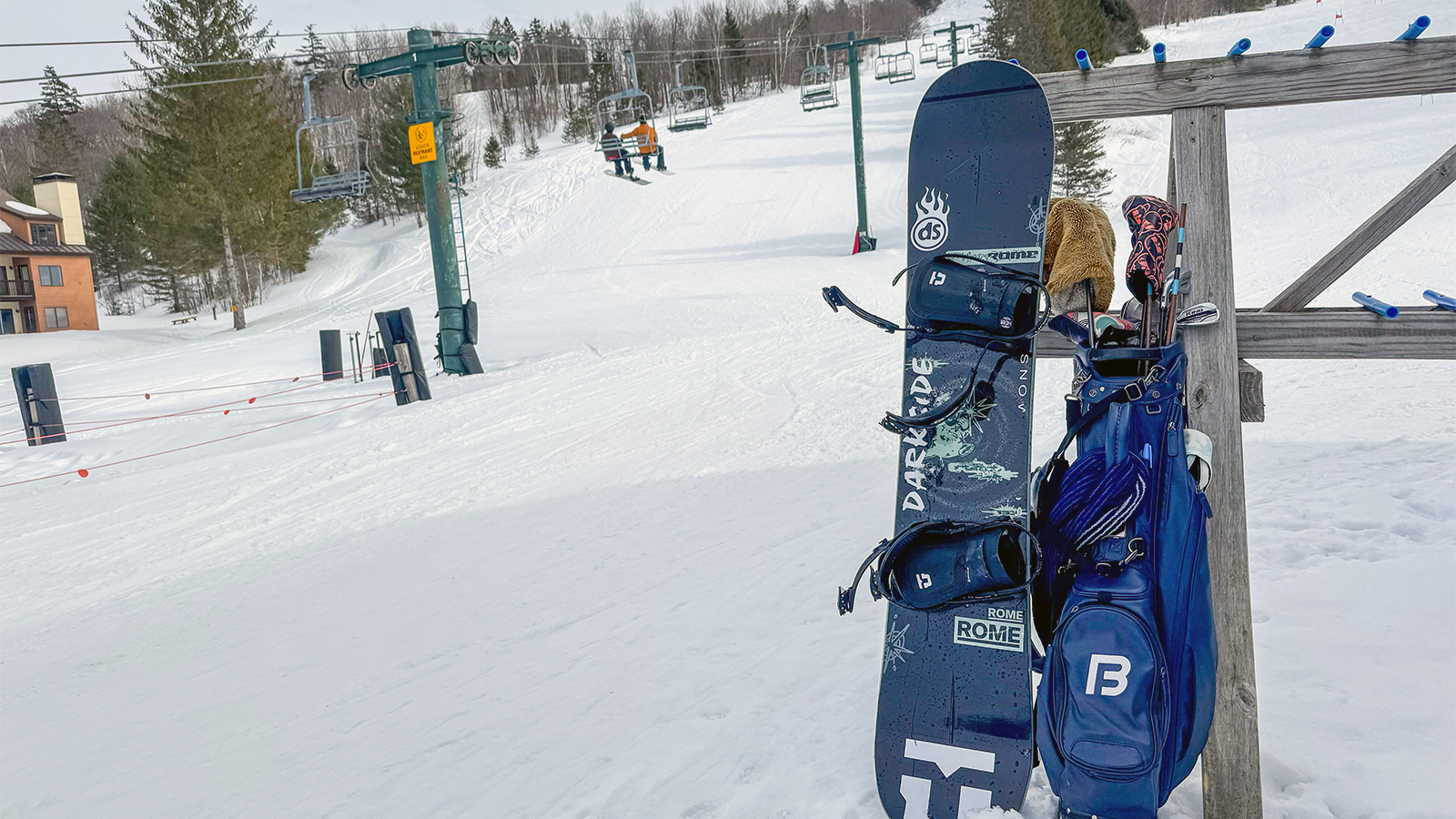
As a PGA Professional in Vermont, winter can feel long and limiting when golf courses are covered in snow. Fortunately, I have been snowboarding since I was five years old, and it has become more than just a way to pass the time — it is a way to stay athletic, competitive, and connected to movement throughout the offseason.us
At first glance, golf and snowboarding seem to have little in common. One is played on manicured fairways, the other on snow-covered mountains. However, beneath the surface, both sports depend on very similar athletic fundamentals. Here are several key snowboarding movements that directly translate to the golf swing.
Power Starts from the Ground Up
In both golf and snowboarding, power comes from the ground.
In the golf swing, force is generated through the connection between the player’s feet and the
ground. Proper pressure into the turf allows energy to transfer efficiently through the body and
into the club.
ground. Proper pressure into the turf allows energy to transfer efficiently through the body and
into the club.
In snowboarding, the same idea applies. Power begins with how the rider interacts with the snow through the board. Strong, controlled pressure into the snow creates stability and sets up dynamic movement. In both sports, if the ground connection is weak, the movement above it will be compromised.
Edge Pressure and Weight Transfer
A fundamentally sound golf swing requires effective weight transfer. During the backswing, pressure moves into the back foot. During the transition and downswing, that pressure shifts toward the lead foot.
In snowboarding, weight transfer occurs differently but follows the same concept of pressure control. Rather than shifting one foot to another, the rider transitions pressure between the heels and toes to initiate and control turns.
Both sports demand awareness of pressure shifts and balance. Mastering how and when to move pressure is essential for power, control, and consistency.
Separation and Sequencing
This may be where golf and snowboarding align most closely.
In the golf swing, efficient power comes from proper sequencing — the lower body initiates the downswing while the upper body momentarily resists. This creates separation between the hips and shoulders, producing more power.
The same principle applies when performing spins or dynamic movements on a snowboard. The lower body begins the movement while the upper body follows, creating a recoil effect that generates rotation and control.
Separation creates stored energy. Stored energy creates power.
Athletic Posture
Both sports require a strong, athletic base.
In golf, maintaining posture — with flexed knees, engaged hips, and a neutral spine — allows for efficient rotation and balance.
In snowboarding, staying in an athletic stance with knees flexed and hips centered over the board enables quick adjustments and stability at speed.
An athletic posture is not static; it is dynamic and responsive. In both sports, posture is the key to consistent performance.
Head Stability and Balance
Head movement plays a significant role in both golf and snowboarding.
In golf, excessive head movement can impact consistency. Stability allows the body to rotate around a consistent center.
In snowboarding, unnecessary head movement can disrupt balance and alignment, especially at higher speeds or during landings.
A simple reminder applies in both sports: where the head goes, the body tends to follow.
Rhythm Over Aggression
Rhythm is one of the most overlooked yet important components of performance.
In golf, tempo and timing directly influence contact and shot consistency. An overly aggressive transition often leads to poor shots.
In golf, tempo and timing directly influence contact and shot consistency. An overly aggressive transition often leads to poor shots.
In snowboarding, forcing movements without proper rhythm can result in edge catches and unstable turns.
In both sports, fluidity is extremely important. The goal is controlled, athletic motion — not tension or aggression.
Although golf and snowboarding are played in entirely different environments, they share fundamental athletic principles: ground interaction, pressure control, sequencing, posture, stability, and rhythm.
For me, snowboarding is not just a winter hobby — it's a way to refine movement patterns that directly support my golf swing.