Golf Travel
  Leaderboards
  Become a Member
  Shop
Shop  Trade In
 quick coaching
2026 U.S. Amateur: 3 Course Management Lessons From Merion
By Brendon Elliott, PGA
Published on
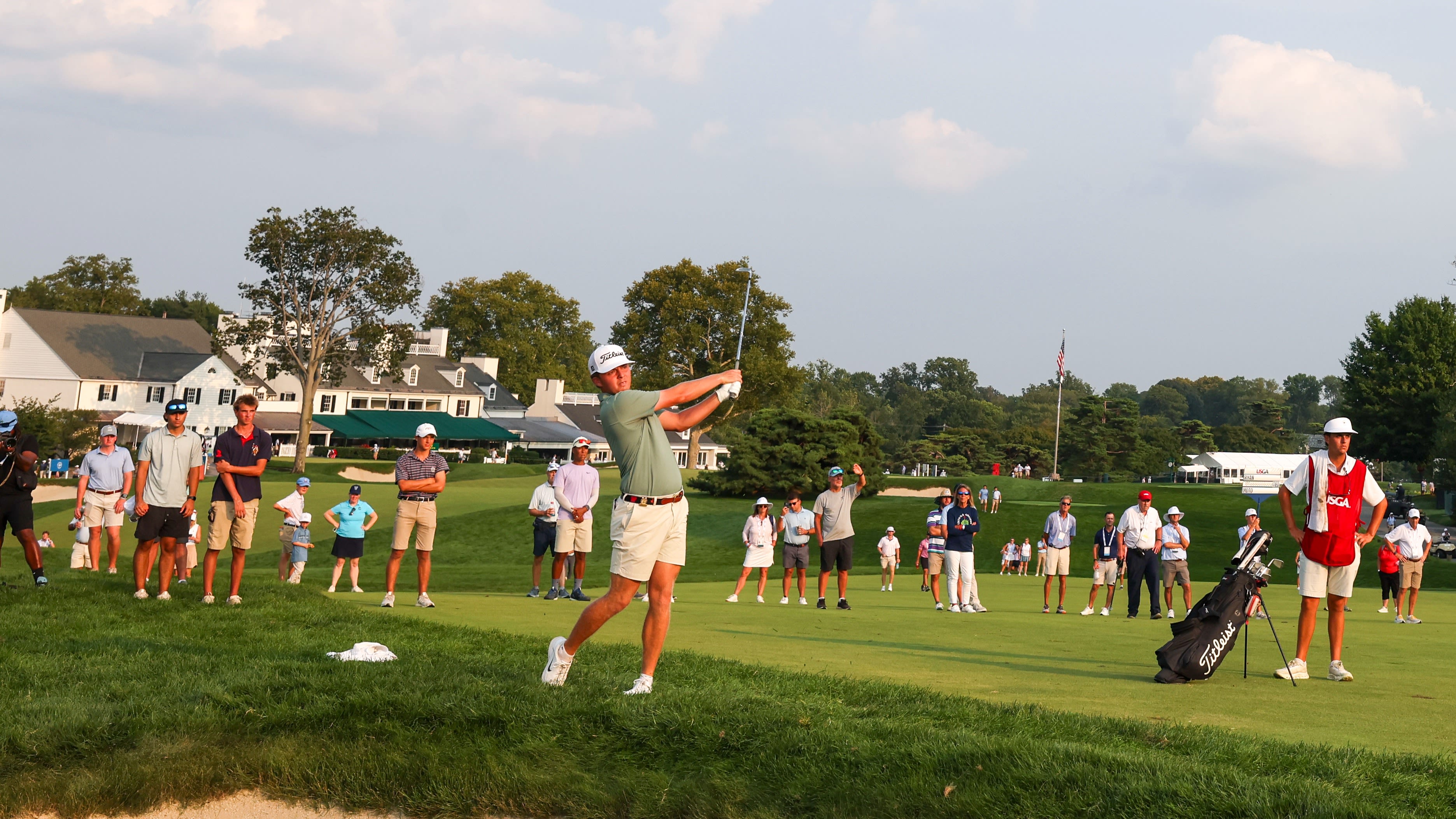
Golfers see 6,939 yards on a scorecard and tend to relax. I understand why. In a game now filled with 7,400-yard tournament courses, something under 7,000 can look manageable.
Merion Golf Club is a good reminder that yardage can lie to you.
The 2026 U.S. Amateur began with 312 players competing in stroke play at Merion and Philadelphia Country Club. Merion is a par 70 with a 75.3 course rating and a 153 slope. It has short par 4s that tempt players, long holes that demand plenty and fairways where finding the grass does not guarantee a clean look at the green.
Most golfers will never face U.S. Amateur conditions, but they see smaller versions of those problems all the time. A tee shot does not fit their eye. A decent drive stops on a slope. A long approach reaches the green but will not stay there.
The smart play starts before the swing.
Stop Teeing It Up on Autopilot
Golfers routinely walk to the middle of the teeing area, stick a tee in the ground and then start looking for a target.
That order is backward.
Walk behind both sides of the teeing area first. The view can change quite a bit over six or eight feet, especially on a dogleg or when a bunker cuts diagonally into the fairway. Your goal is not to follow the old blanket advice of always teeing up on the same side as the trouble. Sometimes that helps. Sometimes it makes the hole look tighter.
Use this quick check:
- Look from the left side, the middle and the right side.
- Picture the starting line of your normal shot, including its usual curve.
- Choose the spot that gives that entire ball flight the most room.
I often see golfers trying to create a fade or draw they rarely practice when a better tee position would make their normal shot fit. If the drive only works when it starts beside a tree and curves perfectly, keep looking. That plan asks too much.
A Fairway Lie Can Still Change the Shot
Golfers are pleased when a drive finds the fairway, then sometimes stop reading the shot once they see short grass.
Merion’s contours do not allow that. A ball above or below the feet changes the starting direction and curve you can reasonably expect. The flag should not make the decision by itself.
For a right-handed player, a ball above the feet will usually start and curve left. Grip down enough to account for the ball being closer to you, stand a touch taller and aim right of where you want the shot to finish. A ball below the feet generally wants to move right. Widen your stance, flex your knees and aim farther left. Left-handed players reverse those directions.
There is an important course-management piece here, too: if the slope wants to move the ball toward the tucked side of the green, do not spend the swing fighting it. Pick a target that lets the lie carry the ball toward the wider portion of the putting surface.
Don't Ask a Green to Hold a Shot That Can't Stop
From longer range, golfers usually focus on one question: What club will get there?
I would add another: What club can get there in a way the green will accept?
At Merion, a shot arriving too low or too fast can bound through the target area. The same is true at home when the pin is behind a bunker or the green runs away from you.
On the range, compare your longest iron with a hybrid or fairway wood. Hit five balls with each to the same target and note the highest point of flight, the first bounce and how far the ball rolls. Do not judge only by total distance. Find the club that reaches the target without a forced swing and produces the most predictable finish.
Many golfers launch a hybrid higher than a long iron. Play the ball slightly forward of center, let the sole brush the turf and finish with your chest facing the target. Trying to help the ball up usually produces the thin or heavy contact you were trying to avoid.
If neither club can carry the fronting trouble and stop the ball, the answer is not a harder swing. Lay up. If the green is open in front, use the opening and allow for the release..
PGA of America Golf Professional Brendon Elliott is an award-winning coach and golf writer. Read his recent “The Starter” on R.org and his stories on Athlon Sports. To stay updated on his latest work, sign up for his newsletter and visit OneMoreRollGolf.com.